
Has the magic faded? The ‘curse’ of Ascot, the controversy, and the crossroads of Saul Chaminuka
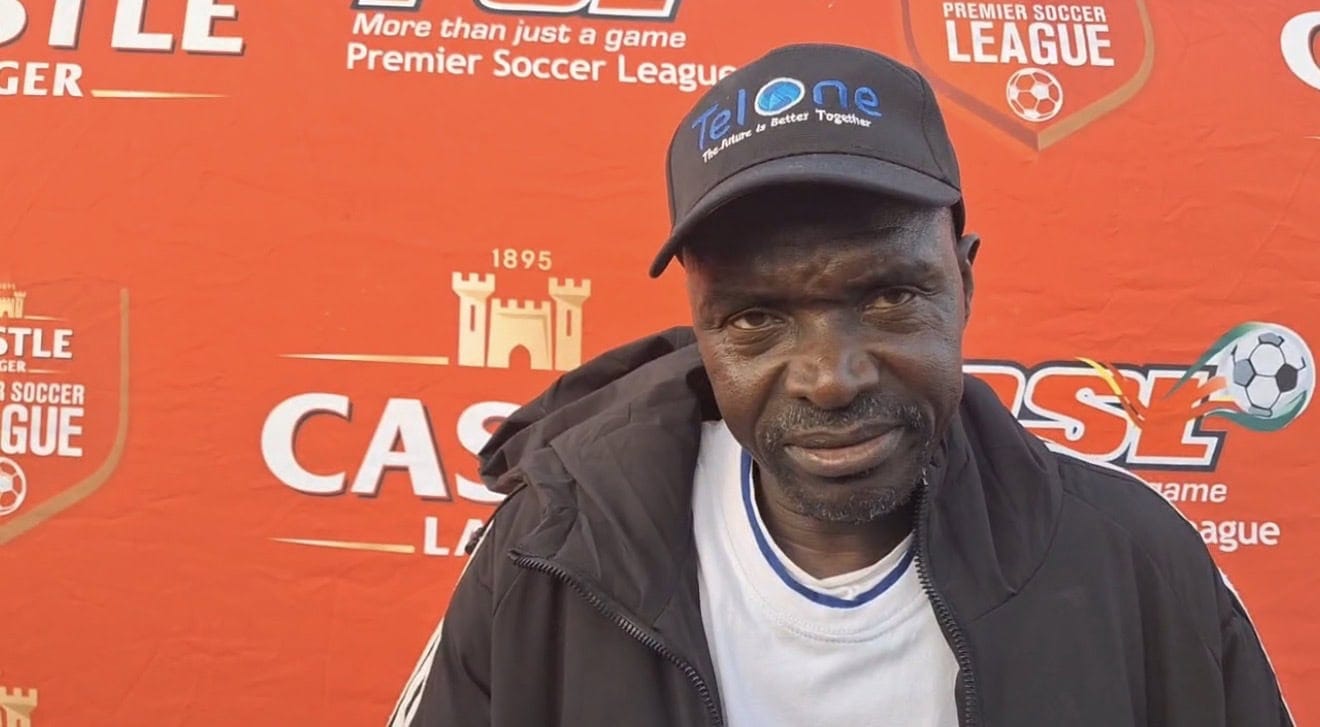
“I think we need to get away from this pitch and play elsewhere. If we are thinking of winning, you cannot talk about superstition, but when a team has lost eight games at home, that must mean something.”
The words hung in the air at Ascot Stadium last weekend. TelOne FC head coach Saul Chaminuka had just watched his Wifi Boys slump to a 0-1 defeat against Agama FC in the Castle Lager Premier Soccer League.
Four games into his tenure. Four games, zero wins, one draw, three losses. Eight points from 15 games. Anchors of the log.
For a coach once voted Coach of the Year, who nearly pulled off the impossible with ZPC Kariba in 2014, who built cult heroes at Bikita Minerals, the statement felt heavy. It wasn’t just frustration. It sounded like a man searching for answers in the wrong place. A man whose magic touch, if it ever existed, now feels distant.

Ten months ago he was walking out of Mandava Stadium, not because the final whistle had blown, but because he ordered it. The walkout that cost him Dynamos. The walkout that still follows him like a shadow. Today, as TelOne sink deeper, the question Zimbabwean football can’t avoid is this: Has Saul Chaminuka lost his magic touch?
Post-match interviews are supposed to be about tactics, missed chances, and the next game. But Chaminuka went somewhere else. He went to the ground beneath his players’ boots.
“We need to get away from this pitch and play elsewhere,” he said after Agama FC’s lone goal condemned TelOne to another home defeat. “You cannot talk about superstition, but when a team has lost eight games at home, that must mean something.”
Eight home defeats. In a league where home form is supposed to be your shield, TelOne’s fortress has become a prison. The Wifi Boys have won once all season. Drawn five. Lost 9. And Chaminuka, parachuted in to replace the sacked Herbert Maruwa in a month ago, has overseen four of those losses directly.
Match 1: A 3-0 Midlands derby humiliation at the hands of Hardrock. No feel-good start, no honeymoon period.
Match 2: A 1-1 draw away to FC Hunters. One point, but it felt like two dropped.
Match 3: A 1-2 home loss to Manica Diamonds. Promising spells, no cutting edge.
Match 4: The 0-1 to Agama FC. A set piece, a lapse, three more points gone.
Four games. That’s all he’s had since taking over in early May 2026. Yet the weight on his shoulders looks like four seasons. Because at TelOne, the numbers are not just bad. They’re existential.
The Wifi Boys are not just bottom. They are cut adrift. Eight points. One win. Five draws. The relegation trapdoor is not creaking anymore. It’s wide open. And Chaminuka’s comment about the pitch tells you everything about the state of mind in that dressing room. When a CAF A-licensed coach, one of the few in Zimbabwe with that badge, starts talking about curses, you know the belief is broken.
But is the pitch cursed? Or is something else broken?
To understand Chaminuka today, you have to go back ten months. Back to Mandava Stadium. FC Platinum vs Dynamos. Dying minutes. Penalty to Platinum. Chaminuka, then in charge of the Harare giants, allegedly told his players to walk off.
They did. The game was abandoned. FC Platinum were later awarded a 3-0 win. Dynamos were fined. The points deduction and chaos shoved the Glamour Boys into a relegation fight that Kevin Kaindu would later have to rescue them from.
The suspension came first. Then the sacking. For a coach who had built his reputation on intelligence, on tactical nuance, on reading the game two moves ahead, it was a self-inflicted wound. The image of Dynamos players marching off the pitch while Platinum stood and watched became the defining image of Chaminuka’s recent career.
Defenders said he was protecting his players from a bad decision. Critics said he was protecting his ego. Either way, the magic, the aura of the tactician who out-thought opponents, was dented. In Zimbabwean football, where discipline and politics matter as much as formations, walking off is not forgotten.
From that moment, Chaminuka became “nomadic”. Not by choice, but by consequence.
After Dynamos, Chaminuka didn’t stay still. He couldn’t.
Black Rhinos was next in 2019. He took over with the army side already sliding toward relegation. He didn’t lose a game in charge. Not one. Yet he couldn’t save them. The damage was done before he arrived. The record books will show “Chaminuka: unbeaten”. The reality will show “Chaminuka: relegated”. In football, context is cruel.
Then came the short stints. Green Fuel FC. Bikita Minerals FC. Bikita Chida Athletic Club, where he lasted exactly one 45-minute training session before TelOne hijacked him in June. Each stop shorter than the last. Each exit with questions.
At Bikita Minerals, he had history. He built the squad that danced in the Premier League with Evans Katema, Masimba Mambare, Allan Gadzikwa, and Carlton Munzabwa. Memorable times. Entertaining football. But even there, the relationship ended in controversy. Chaminuka left citing unpaid dues. The club said otherwise. The pattern was forming: brilliant start, messy exit.
Now TelOne. The Wifi Boys. A club with resources, with infrastructure, with expectations. But also a club drowning. And Chaminuka, the nomadic gaffer with the CAF A badge, is the latest man tasked with performing CPR on a patient that’s flatlining.
But we cannot write Chaminuka’s story without 2014. Because that was the year the magic was real.
ZPC Kariba. Maiden season in the Premier Soccer League. Nobody gave them a chance. They were the power company’s team. Functional, not fanciful. Chaminuka changed that.
He built a side that played with belief. They pressed, they passed, they believed. Week after week, the “bunch of no-names” kept punching above their weight. And on the last day of the season, they were still in the title race. Dynamos eventually pipped them, but the damage to the establishment was done.
That season, ZPC Kariba swept the awards. Dennis Dauda was Soccer Star of the Year. Limited Chikafa was first runner-up. Tendai Hove was Goalkeeper of the Year. And Saul Chaminuka was Coach of the Year.
He had taken a promoted side and made them believe they could be champions. He had a magic wand then. He turned journeymen into stars, and a club into contenders. Opponents hated playing them because you never knew what Kariba would do next.
If you ask old Kariba players about Chaminuka, they don’t talk about tactics first. They talk about belief. He made them believe. That’s the magic touch. And for one season, nobody in Zimbabwe had more of it.
So what changed between 2014 and 2026?
First, the context changed. In 2014, Chaminuka was the underdog whisperer. He had nothing to lose. Players bought into him because he was their best shot at relevance. At Dynamos, at Rhinos, at TelOne, he inherited crises. Crisis management is not the same as team building. You don’t build belief when the house is already on fire.
Second, the controversies changed him. The Mandava walkout branded him “reactive” instead of “proactive”. Coaches live and die on trust. Once players and administrators start wondering what you’ll do next, the magic gets clouded.
Third, the game moved. Zimbabwean football in 2026 is faster, younger, more analytical. Chaminuka’s strength has always been man-management and motivation. But motivation without structure only gets you so far. At TelOne, structure is missing. The goals are not flowing. The defense is leaking. And four games is not enough to install a philosophy, but it’s enough to see the cracks.
His TelOne record is stark: 4 games, 0 wins, 1 draw, 3 losses, 4 goals for, 7 against. The team has lost belief at home. And when the coach starts talking about cursed pitches, the players hear it. Superstition is contagious.
There’s a cruel irony here. Chaminuka is one of the few Zimbabwean coaches with a CAF A license. On paper, he’s qualified for the biggest jobs on the continent. In reality, he’s fighting for survival in Gweru.
The badge means he understands periodization, sports science, tactical periodization, all the modern buzzwords. But TelOne don’t need periodization right now. They need points. They need a goal. They need a home win to kill the ghost.
And that’s the trap. A qualified coach with a tarnished recent CV, trying to fix a broken team in real time, while the media asks if he’s still got it. Every press conference becomes about the past, not the future. Every defeat becomes proof of decline.
But football is not linear. Coaches don’t just “lose” magic. Sometimes the environment loses it for them.
Here’s the truth: Chaminuka hasn’t forgotten how to coach. You don’t coach ZPC Kariba to the last day of the season by accident. You don’t make Dennis Dauda Soccer Star by accident. The mind that built that team is still in there.
The question is whether TelOne is the right place for it to come out.
He has three problems. One, time. The league won’t wait. Eight points with the season deep into its second half means every game is a cup final. Two, belief. The players have heard “cursed pitch” enough times now. Psychology matters. Three, squad. The Wifi Boys have talent, but talent without confidence is just potential.
If Chaminuka can do what he did at Kariba, he can do it again. Strip the team back to basics. Make them hard to beat first. Find one goal, then another. Kill the curse with results, not rhetoric. Get away from the pitch talk and back to the training ground talk.
The blueprint exists. At Kariba, he made a promoted team believe. At TelOne, he has to make a team fighting relegation believe again.
So has Saul Chaminuka lost his magic touch?
No. But the magic needs the right stage.
His magic was never about flashy tactics. It was about belief. About making players run through walls because they thought they could. In 2014, ZPC Kariba believed. In 2026, TelOne do not.
The walkout at Mandava, the short stints, the “cursed pitch” comments, these are symptoms, not the disease. The disease is a coach who has spent the last decade firefighting instead of building. Magic needs time, trust, and a project. Chaminuka hasn’t had all three since Kariba.
At TelOne, he has a project. He has a qualified staff. He has a club that can pay wages. What he needs now is a win. One win at Ascot. One goal that doesn’t come from the opposition. One afternoon where the pitch stops being cursed and starts being home.
If he gets that, the magic won’t just return. It will remind everyone why, ten years ago, Saul Chaminuka was Coach of the Year.
Until then, the nomadic gaffer remains at a crossroads. Behind him: the walkout, the relegation battles, the 45-minute training sessions. Ahead of him: either redemption, or another line on a CV that’s becoming too long for comfort.
For now, the magic isn’t dead. It’s dormant. And in football, dormant magic has a way of waking up when you least expect it. Usually right after you stop talking about curses and start talking about work.
Chaminuka and TelOne will face a resurgent giant Highlanders FC next this weekend at Ascot Stadium. For the Wifi Boys and their faithful, it’s the ultimate test. The TelOne faithful will certainly be hoping for a home win to believe again.